

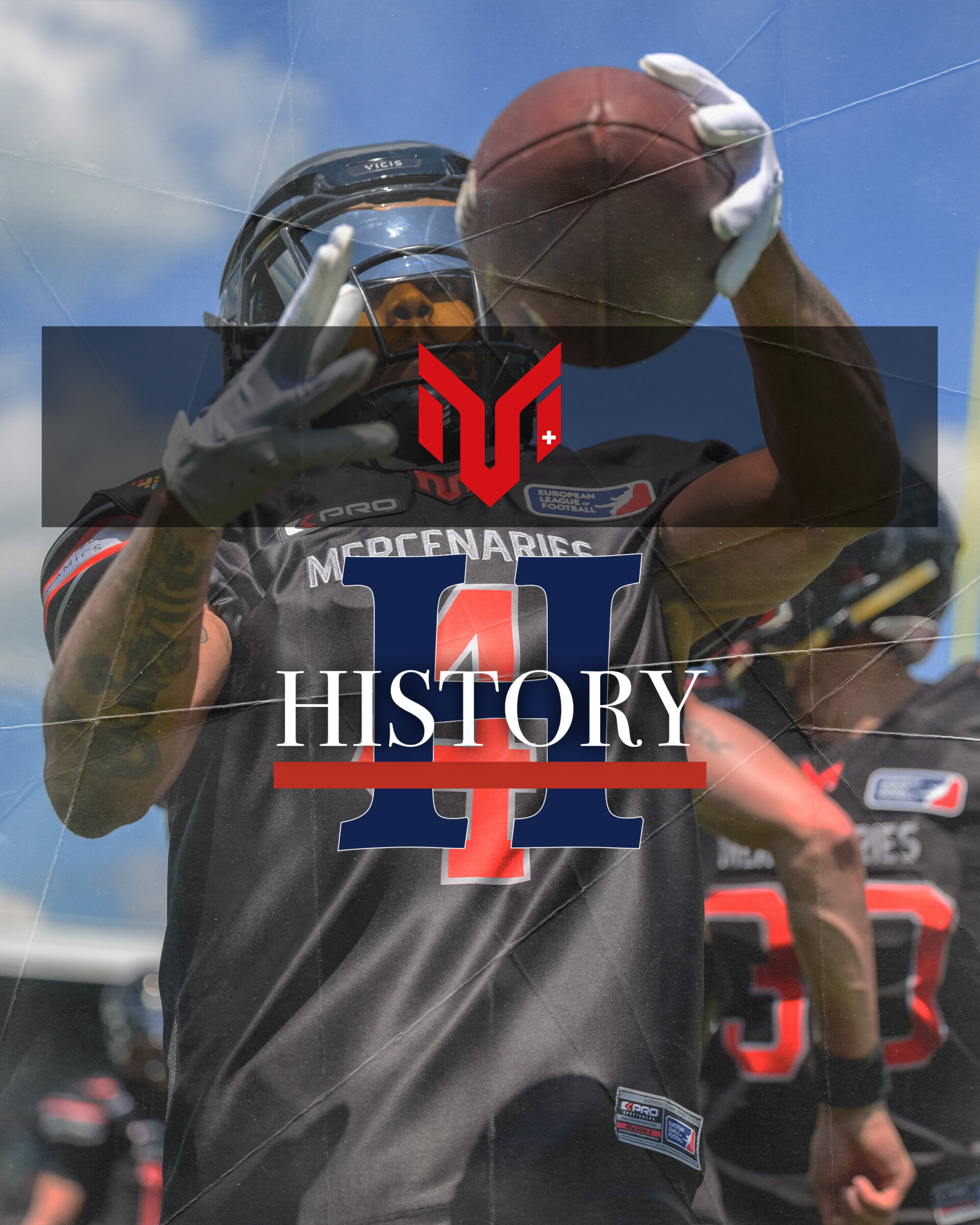
The Rise of the Helvetic Mercenaries
In April 2024, the Swiss Alps trembled — not from thunder, but from a panic pivot.
Just weeks before the European League of Football season, the Helvetic Guards were gone. Vanished. Folded.
And out of that smoking crater, the league scrambled to keep Switzerland on the map.
The solution? A brand-new team, born almost overnight: the Helvetic Mercenaries.
This wasn’t expansion.
It was damage control with shoulder pads.
Teams for 2024 at this point
- Berlin Thunder (Berlin)
- Hamburg Sea Devils (Hamburg)
- Panthers Wrocław (Wrocław)
- Frankfurt Galaxy (Frankfurt)
- Cologne Centurions (Köln)
- Barcelona Dragons (Reus/Spanien)
- Stuttgart Surge (Stuttgart)
- Rhein Fire (Duisburg)
- Raiders Tirol (Innsbruck)
- Vienna Vikings (Vienna)
- Milano Seamen
- Fehervar Enthroners
- Munich Ravens
- Paris Musketeers
- Madrid Bravos
- Helvetic Mercenaries
A Resurrection Under Pressure
When the Guards officially shut down on April 4, 2024, there were barely seven weeks left before kickoff.
No team, no roster, no plan. For most leagues, that would’ve meant disaster.
But the ELF doesn’t do surrender — it does improvisation.
Within a few days, the “Mercenaries” were announced as Switzerland’s replacement franchise.
Same region, same stadium, but a completely different energy: dark, rebellious, and raw.
It was football’s version of a last-minute emergency surgery.
Necessary — but messy.
From Swiss Precision to Swiss Mayhem
The Guards had been the model of structure — disciplined, reserved, professional.
The Mercenaries were the opposite: unpredictable, aggressive, and born out of pure survival instinct.
Their announcement video looked like a war movie trailer.
Steel, smoke, and a tagline that said everything:
No masters. No orders. Just mission.
It hit hard. Maybe a little too hard.
Because beneath the hype, everyone knew — this wasn’t planned brilliance.
It was the ELF plugging a hole in the hull while the ship was already moving.
The League’s Fastest Rebuild Ever
To their credit, the turnaround was astonishing.
Within days, the ELF found investors, stitched together a front office, and assembled a makeshift roster from former Guards players and late signings.
By April 11, the Helvetic Mercenaries were official — just 49 days before the season opener.
It was an impressive rescue, yes — but it also raised eyebrows.
How sustainable could a team be when it hadn’t even existed two months earlier?
The ELF called it resilience.
Critics called it a red flag.
Rebellion in the Alps
Still, fans in Switzerland rallied.
The Guards had stood for order — the Mercenaries stood for defiance.
They were gritty, improvised, and loud, the embodiment of a league that refuses to admit weakness.
And maybe that’s why people loved them.
They were imperfect, chaotic, but real.
A symbol of football that bleeds and battles, even when the clock’s already ticking down.
A Victory Born of Desperation
The Helvetic Mercenaries weren’t the ELF’s next great expansion success.
They were a survival instinct made visible.
Their birth was fast, frantic, and messy — and it exposed something the league could no longer hide:
that beneath the growth and gloss, the ELF was constantly dancing on the edge of crisis management.
Still, the Mercenaries gave the league something it badly needed — a heartbeat, a story, a comeback.
They weren’t the next big thing.
They were the proof that the show must go on — even when the stage is on fire.
