

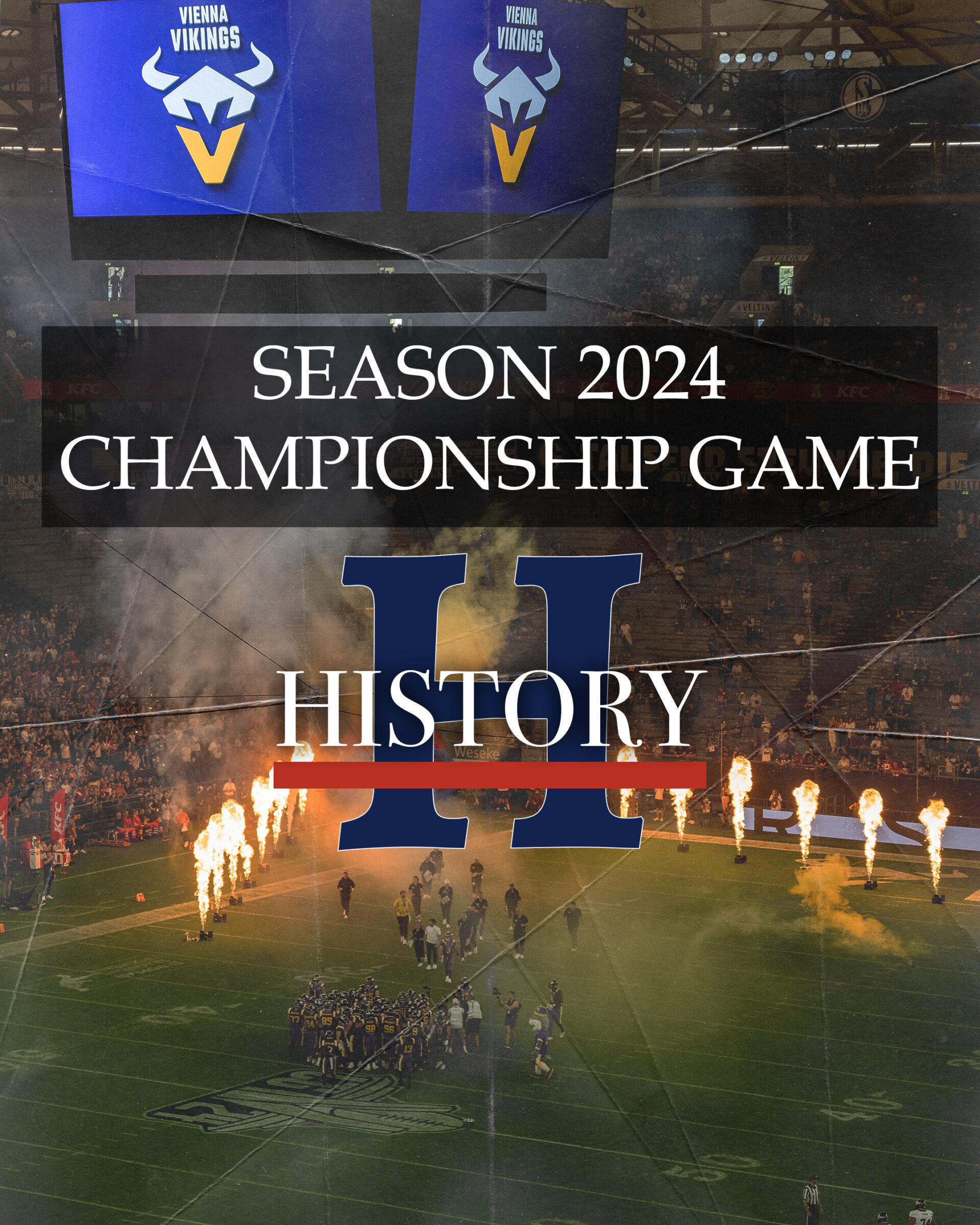
September 22, 2024 — Gelsenkirchen, Germany.
The Veltins-Arena was packed to the rafters.
Over 30,000 fans under a closed roof, pyros exploding, commentators shouting about history in the making — this was supposed to be the league’s proudest day.
The Rhein Fire were about to face the Vienna Vikings for the European League of Football Championship, and everything looked perfect.
Too perfect.
Because beneath the confetti cannons and the corporate sponsors, the ELF was holding its breath.
A Fire Reignites
Rhein Fire had become the league’s crown jewel — professional, disciplined, terrifyingly efficient.
They’d turned Duisburg into a fortress, their fan base into a movement.
And they came into Gelsenkirchen looking to do what no ELF team had ever done: go back-to-back.
The Vienna Vikings, still Europe’s model of structure and success, came to defend their honor.
The matchup was everything the ELF needed — Germany vs. Austria, old money vs. rising empire.
For four quarters, it was a prizefight.
Bodies flew, tempers boiled, and every snap felt like a statement.
In the end, Rhein Fire 36 – 29 Vienna Vikings wasn’t just a score — it was a coronation.
Back-to-back champions.
A dynasty born in a league that still wasn’t sure it could afford one.
Fire at the Top, Trouble Below
The ELF sold the spectacle flawlessly.
LED tunnels, drone shots, commentators calling it “the European Super Bowl.”
But off-camera, reality was catching up.
The Helvetic Guards had vanished months earlier, replaced overnight by the Mercenaries — a fix that fooled no one.
The Milano Seamen were already whispering about a “temporary hiatus.”
Even some of the most loyal franchises were quietly fighting to keep the lights on.
Players were still missing paychecks.
Vendors were still chasing invoices.
And more than one franchise owner was openly asking what had happened to the promised revenue shares.
The ELF wasn’t a dream anymore — it was a business model showing its bones.
The irony wasn’t lost on anyone: while Rhein Fire burned brightest, the rest of the league was running out of fuel.
A League of Lights and Lies
Still, the Veltins-Arena show was breathtaking.
The ELF had pulled off something even the skeptics had to admire — the biggest crowd, the biggest production, and a champion that felt legitimate.
The fans roared like it was the NFL.
For a few hours, everyone could forget the cracks.
But backstage, the murmurs wouldn’t stop.
Was the ELF really building something sustainable?
Or was it just performing greatness until the bills came due?
A journalist from a German outlet put it bluntly after the game:
“It’s a great show. But if you look behind the curtain, the band hasn’t been paid yet.”
Glory, at a Cost
Rhein Fire hoisted their second straight trophy to a chorus of cheers, gold smoke, and roaring drums.
They were everything the league wanted to be — dominant, marketable, heroic.
But as the lights dimmed and the fans filed out into the late September night, the question lingered:
How long can one team’s fire keep the whole league warm?
The ELF had proven it could throw a party.
Now it had to prove it could pay for it.
September 22, 2024 — Gelsenkirchen burned bright.
Too bright.
Because for the first time, everyone could see the cracks glowing underneath.
